
PARLIAMENT PASSES 24 HOUR ECONOMY BILL.
PARLIAMENT PASSES 24 HOUR ECONOMY BILL.
 Princess Adoma Danquah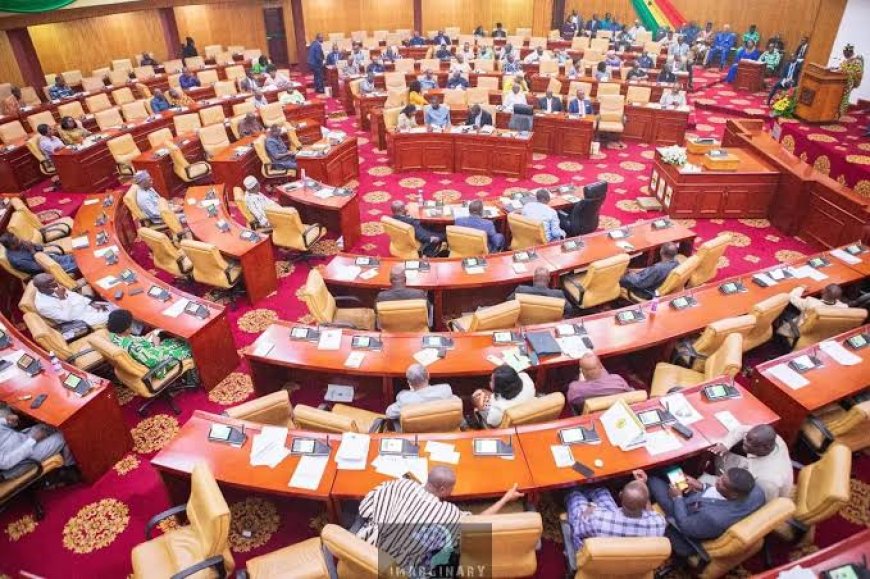
PARLIAMENT PASSES 24 HOUR ECONOMY BILL.


Parliament of Ghana has passed 24 hour economy bill pending to be assented into law.
The 24-hour economy bill when assented into law seeks to establish a 24-hour economy authority to ensure the integrated, sustainable transformation of national systems for economic production, supply chain, marketing and labour power development
The Bill was laid in Parliament by the Deputy Attorney General Justice Srem Sai on Wednesday, December 3, 2025. Acting on a referral, the committee held a meeting to consider the Bill on Friday, January 9, 2026 meeting various stakeholders including officials of the Office of the Attorney General.
As explained by the committee, the 24 hour programme represents a deliberate government intervention designed to address persistent structural weakeness within Ghana's production economy and to reposition the country on a sustainable growth trajectory.
During it's debate on the principles of the Bill, on the minority side, Hon.Dr. Stephen Amoah MP for Nhyaeso described 24-hr economy programme as a 'sham' intended to deceive Ghanaians. According to the lawmaker while the policy may not be a bad idea, there's no need to create an authority.
On the majority side, Hon. Kwame Agbodza Governs explained the bill is not a one-off activity for which requires sod cutting. He further submitted that the 24 hour economy bill will perform a coordinating function for smooth implementation of the policy adding that the bill is already operational referring into big push.
The Bill will establish an authority to set out institutional and structural framework necessary to address longstanding structural challenges within the economy. Again, the 24H economy programme is intended to correct the trade imbalances that have constrained Ghana's economic growth, with the authority giving priority to expansion of exports over imports by systematically enhancing domestic productive capacity and competitiveness.