
From Loyalty to Coup: The 1966 Overthrow of Nkrumah
For many young Ghanaians, the events leading to Ghana’s first coup d’état remain a striking chapter in the nation’s political history.
 HENRY GERCHI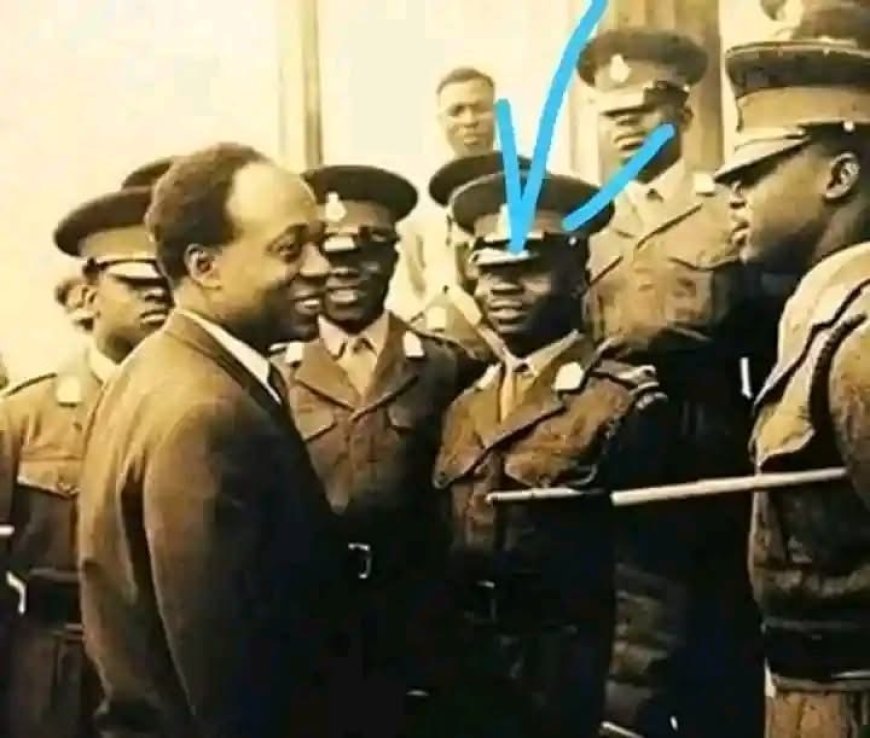
To the youth who didn’t know…


General Emmanuel Kwasi Kotoka smiling with Dr. Kwame Nkrumah a moment frozen in time years before history tore them apart. Nkrumah was Ghana’s first President and one of Africa’s strongest voices for independence, and Kotoka was one of his trusted military officers.
Kotoka was seen as loyal and dependable, a soldier carrying the reputation of trust. Yet sometimes, appearances only show the surface, not the currents beneath.
On February 23, 1966, Nkrumah left Accra on a peace mission that took him to Beijing and then toward Hanoi — part of his efforts to ease the Vietnam War and to build worldwide coalitions.
The very next day February 24, 1966, something dramatic happened:
Lieutenant-Colonel (soon-to-be-Major-General) Emmanuel Kwasi Kotoka, alongside other officers including Major Akwasi Afrifa and members of the Ghana Police, launched a military coup d’état against Nkrumah’s government while he was abroad.
Kotoka broadcast the coup on national radio.
In his announcement, he declared:
“Fellow citizens of Ghana, I have come to inform you that the military in cooperation with the Ghana Police have taken over government… Parliament is dissolved, Kwame Nkrumah is dismissed from office, and the CPP is disbanded.”
The plan was code-named “Operation Cold Chop” a terse, almost chilling metaphor for how they would cut away the government from within.
Nkrumah’s voice after the coup:
In his book Dark Days in Ghana, Nkrumah claimed the conspirators planned far more than just a takeover. He wrote that they plotted harm against him and sowed false stories including tales of secret tunnels and foreign troops to justify their actions. His view was that it was not just a military change but a betrayal of trust.
What happened next:
The coup led quickly to the establishment of the National Liberation Council (NLC) a military-led government that dissolved the ruling Convention People’s Party (CPP), suspended the constitution, and arrested officials.
Some Ghanaians welcomed the coup as a “liberation” from a government that had become increasingly authoritarian; others saw it as theft of democracy and a turning point that set Ghana off course. Many political prisoners were freed, and political structures changed but the debates over whether it was justified or catastrophic still echo today.
Moral Lesson:
History isn’t just dates and names, it’s about trust, vision, and consequence.
They smiled with us, yet some carried daggers behind their backs. Betrayal doesn’t have a uniform; sometimes it wears a handshake. The 1966 coup teaches us that power can turn allies into opponents and friendship into strategy.
Remember this:
A nation’s destiny can be shaped as much by loyalty as by ambition and by the choices of a few, the future of millions can be changed.
Ghana’s first coup wasn’t only a change of government, it was a flashpoint in political theatre, betrayal, and the fragility of trust. And young people today have a responsibility to understand these stories not as static history, but as lessons for leadership, integrity, and civic engagement. ??