
GOVERNMENT INTEND TO REBUILD EQUITY, STABILISE FARMER INCOMES, AND RETURN COCOBOD TO FINANCIAL HEALTH- ISAAC ADONGO.
GOVERNMENT INTEND TO REBUILD EQUITY, STABILISE FARMER INCOMES, AND RETURN COCOBOD TO FINANCIAL HEALTH- ISAAC ADONGO- Princess Adoma Danquah.
 Princess Adoma Danquah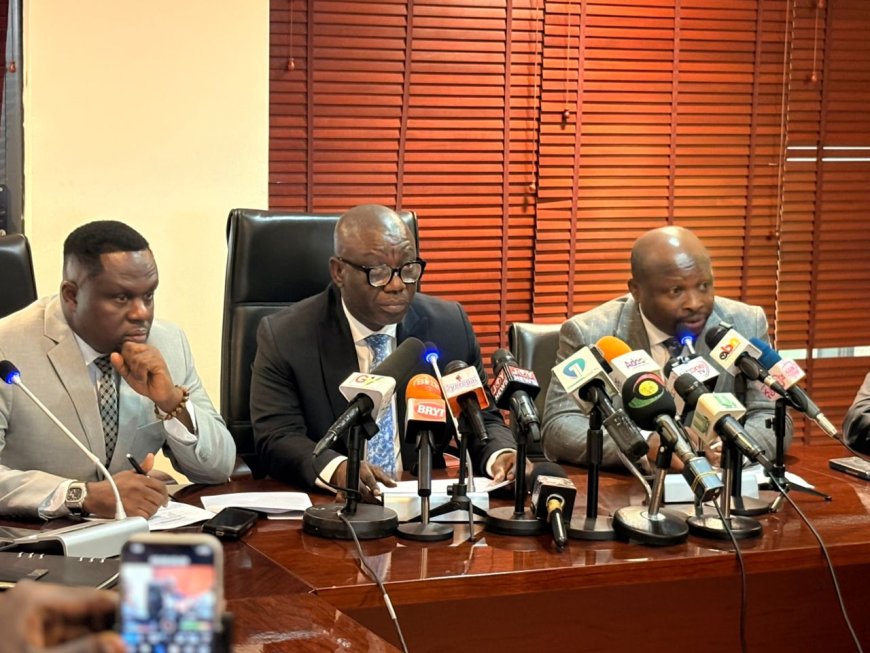
COCOA SECTOR CRISIS: GOVERNMENT INTEND TO REBUILD EQUITY, STABILISE FARMER INCOMES, AND RETURN COCOBOD TO FINANCIAL HEALTH- ISAAC ADONGO- Princess Adoma Danquah.


Majority in parliament has reiterated government intend to rebuild equity, stabilise farmer incomes, and return COCOBOD to financial health and economic boost.
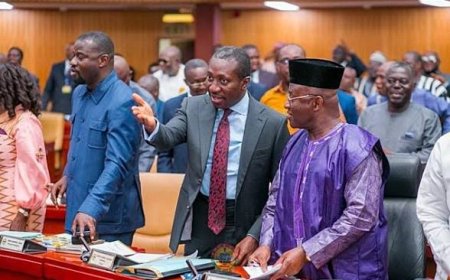
Speaking at a press conference in parliament, chairman on the finance committee, Hon. Isaac Adongo told journalists cocoa sector crisis did not arise from a single policy choice. It reflects years of debt accumulation, operational inefficiency, pricing distortions, and production decline, compounded by an unprecedented global price shock. Therefore government and the cocoa sector has put in place reform programmes to address these structural weaknesses directly.
Hon. Adongo further revealed restoring financial discipline, realigning incentives, and repositioning COCOBOD as a commercially viable institution capable of sustaining Ghana’s cocoa economy is government's number one objective. The objective is recovery of production, stability of farmer incomes, and long-term resilience of a strategic national sector. He elaborated that a stark indicator of COCOBOD’s financial deterioration is the organisation’s equity position over time.
As, as at year 2016, COCOBOD recorded a positive net equity estimated at approximately GH¢1.8 billion, reflecting a healthier balance sheet and capacity to operate within its core mandate. By year 2024, under successive operational and financial pressures, COCOBOD’s equity had deteriorated to a negative position of around GH¢3.8 billion, meaning liabilities exceeded assets.
Majority in parliament further revealed that Cocoa Board’s Net Loss increased from 283,177,000.00 in 2020 to 5,960,353,737.73 in 2024 during this same period, Cocoa Board’s Liabilities also increased from 14,690,191,000.00 in 2020 to 32,906,369,392.48 in 2024. This shift from positive to negative equity underscores the urgency of structural reforms to restore financial viability. Government’s Financial Support and Debt Absorption Measures, acting with urgency and resolve, has initiated several strategic interventions to restore COCOBOD’s balance sheet and protect the cocoa economy. Reforms and structures such as Legacy Debt Conversion Cabinet has directed the conversion of approximately GH¢5.8 billion in legacy COCOBOD debt owed to the Ministry of Finance and the Bank of Ghana (BoG) into equity-equivalent instruments, subject to parliamentary approval.
This conversion is designed to eliminate unsustainable debt on COCOBOD’s books and restore positive equity, thereby improving its financing capacity and creditworthiness. The amount includes GH¢3.7 billion owed to the Ministry of Finance and GH¢1.38 billion owed to the Bank Of Ghana. Also the transfer of Cocoa Road Liabilities Recognising that non-core activities have disproportionately contributed to COCOBOD’s debt burden, Cabinet has approved the transfer of GH¢4.35 billion in cocoa road liabilities to the Ministry of Finance and the Ministry of Roads and Highways, freeing COCOBOD from responsibilities that should not have been within its core operational remit.
This transfer will relieve COCOBOD’s balance sheet of large infrastructure obligations. Allow COCOBOD to focus on core cocoa sector functions. Strengthen fiscal management by allocating infrastructure costs to the appropriate ministries. Government has endorsed a new financing framework using domestic cocoa bonds. These bonds will fund cocoa purchases with repayment tied to sales proceeds within the crop year, improving liquidity and reducing reliance on foreign syndicated loans. This revolving finance mechanism is expected to provide stable working capital throughout the crop season. Improved cash flows for timely farmer payments.