
FONAR Calls for Journalists Involvement as Striga Weed Threatens Food Security Across Northern Ghan
Food security
 Adongo Comfort
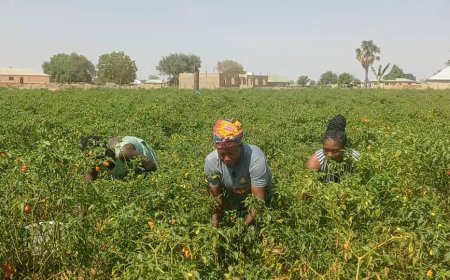
Across the sun-baked farmlands of Northern Ghana, smallholder farmers face a quiet, devastating enemy hidden beneath the soil. Long before its delicate pink and purple flowers bloom, Striga hermonthica widely known as "witchweed" attaches itself directly to the root systems of staple cereal crops like maize, sorghum, millet, and upland rice. The parasite siphons off water and vital nutrients long before the farmer even notices its presence, leaving crops stunted, yellowed, and wilted in fields that received good rainfall.


By the time the purple flowers appear above ground, the damage for that season is largely done. Entire harvests face yield losses of up to 80%, pushing rural families deeper into food insecurity and forcing many to abandon their fields. To make matters worse, a single Striga plant can release tens of thousands of microscopic seeds that remain dormant in the soil for years, making infested land nearly impossible to farm productively without target interventions.
Experts emphasize that Striga is not merely an aggressive pest, but a direct symptom of depleted soils. Continuous cropping without organic inputs and the loss of tree cover strip the land of its natural biology. Stressed host crops then release chemical signals into the nutrient-starved soil, triggering Striga seeds to germinate and spread unchecked.
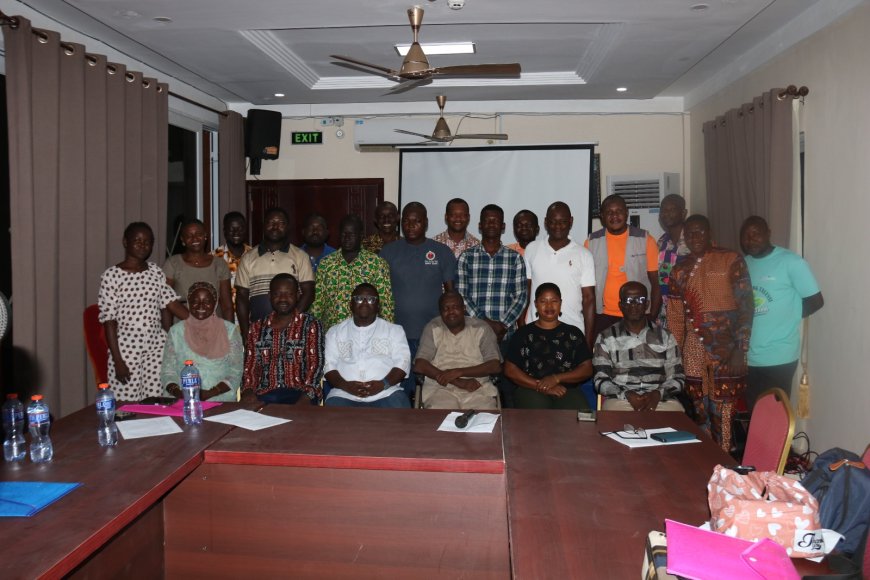
To break this destructive cycle, the Forum for Natural Regeneration (FONAR), in partnership with the Ministry of Food and Agriculture (MOFA) and the Ghana Journalists Association (GJA), convened a sensitization forum for media practitioners on Thursday, September 17, 2026, at the Blue Sky Hotel in Zuarungu, Bolgatanga East. Supported by the Awaken Trees Association of Austria, the initiative aims to mobilize accurate, widespread public communication to combat the crisis.
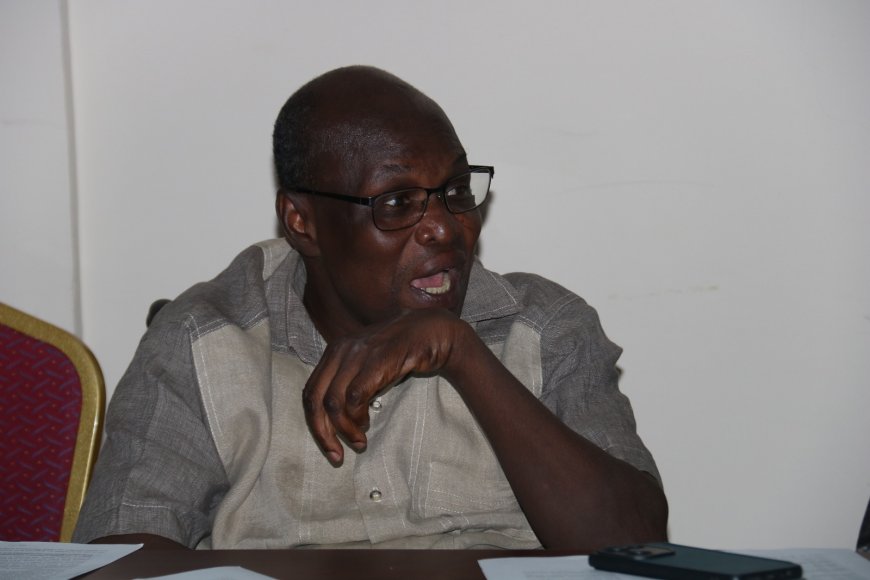
Delivering the opening address, Executive Director of FONAR, Mr. Sumaila S. Saaka, emphasized that controlling witchweed requires addressing its root cause: soil health. Through Farmer Managed Natural Regeneration (FMNR) and climate-smart agroforestry, FONAR helps communities restore native trees, organic matter, and soil fertility to build resilient fields capable of resisting parasitic weeds.
"Striga is not simply a farmer's misfortune. It is a signal a signal that our soils are tired," Saaka stated. He urged the government to treat Striga as a national food security threat, calling for dedicated budget lines for community level biocontrol and land restoration across the Upper East and Upper West regions.
Representing the agricultural sector, the Upper East Regional Director of Agriculture, Alhaji Zakaria Fuseini, noted that extension officers frequently encounter Striga across district reports. He stressed that MOFA’s agronomic interventions such as improved seed varieties and extension guidance must work side by-side with ecological land restoration.
"MOFA's agronomic approach and FONAR's work on land restoration are not two competing solutions to Striga, but two necessary halves of the same solution," Fuseini explained, encouraging journalists to ask critical questions about farmer access to certified seeds and long-term soil health strategies.
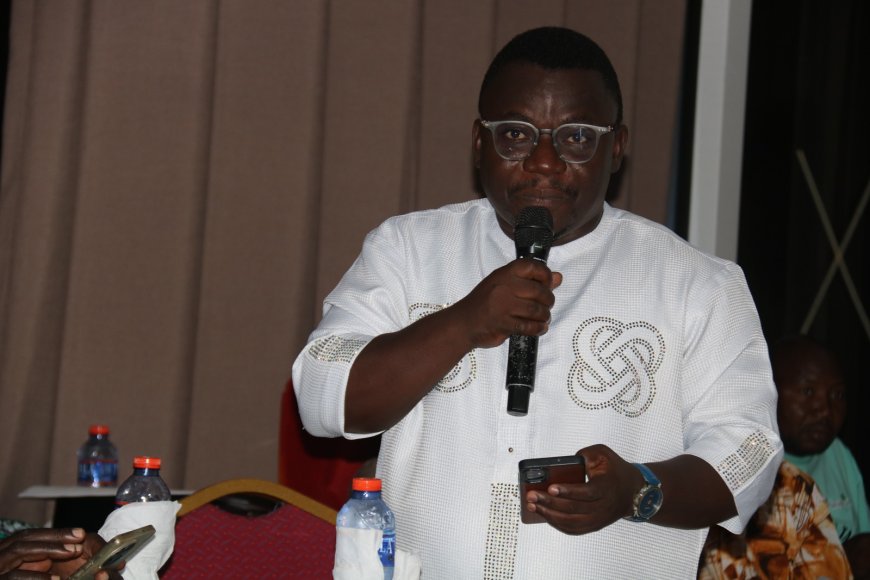
GJA Upper East Regional Chairman, Mr. Albert Sore, highlighted the crucial role of the press in telling deeper agricultural stories. He urged journalists to look beyond headline-grabbing disasters like floods and price spikes, and instead focus on slow-building, underlying challenges that affect rural livelihoods.
"What our farmers need from us is accurate, balanced, and consistent reporting," Sore said, encouraging journalists to visit affected farms, amplify the voices of rural producers, and maintain long-term coverage of the interventions taking shape across Northern Ghana.
By uniting technical agricultural expertise, ecological restoration techniques, and proactive media reporting, stakeholders are working to ensure that Northern Ghana's smallholder farmers have the knowledge and structural support needed to reclaim their fields from the silent thief.