
Ghana Spends GH¢8 Billion on Streetlights in Three Years, Yet Darkness Persists
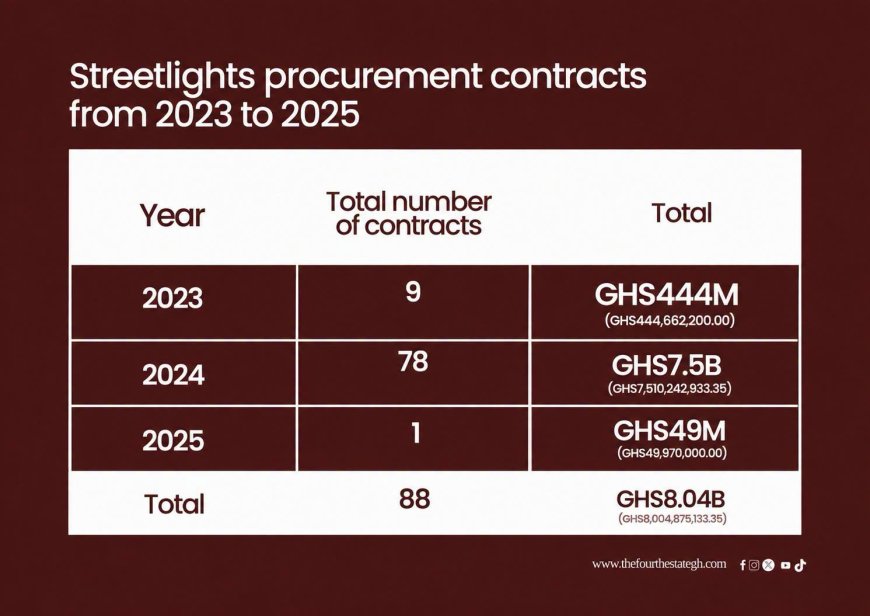
An investigation by The Fourth Estate has revealed that Ghana awarded 88 streetlight contracts worth about GH¢8 billion between 2023 and 2025
 HENRY GERCHI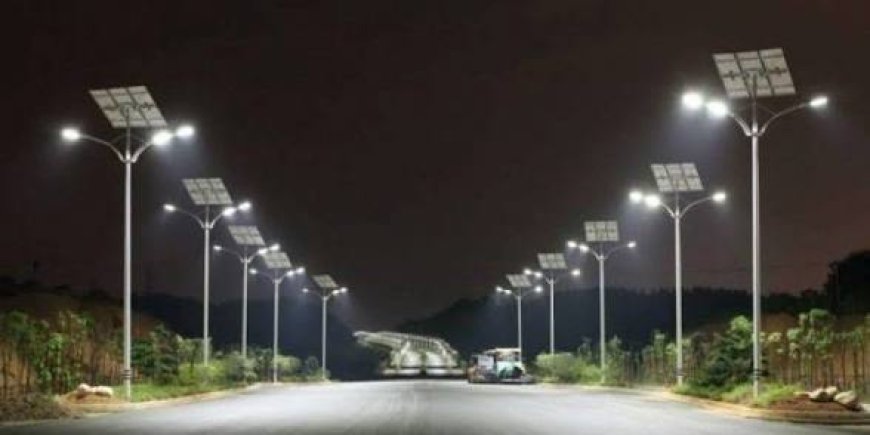
Accra, August 22, 2026 — Ghana spent approximately GH¢8 billion on streetlight supply contracts between 2023 and 2025, yet significant portions of the country remain poorly lit at night, according to an investigation by The Fourth Estate.


The investigation, based on information obtained from the Ministry of Energy and Green Transition through a Right to Information request, found that the government awarded 88 separate contracts to 25 companies during the three-year period.
GH¢7.5 billion spent in 2024 alone
The figures show a sharp increase in expenditure on streetlights.
In 2023, nine contracts were awarded at a combined cost of about GH¢400 million.
The following year, the number of contracts jumped dramatically to 78, with a total value of approximately GH¢7.5 billion.
By December 2025, one additional contract valued at about GH¢49 million had been awarded.
The investigation indicates that all 88 contracts were awarded through single-source procurement, with the average contract reportedly costing about GH¢90 million.
Billions spent, but streets remain dark
Despite the enormous expenditure, The Fourth Estate reports that many of the streetlights are either not functioning or have failed to adequately illuminate roads and communities.
The persistent darkness has raised concerns about whether the projects have delivered value for money, particularly given the scale of public resources committed to them.
Road safety experts have previously linked poor nighttime visibility to road crashes.
The 2024 Accra Road Safety Report, for instance, noted that many road traffic fatalities occurred during weekend crashes between 8 p.m. and midnight, a pattern the report associated partly with high vehicle speeds and reduced nighttime visibility. It recommended improved visibility interventions.
The Kumasi Metropolitan Assembly also noted in a 2024 report that improved street lighting could help protect vulnerable road users where visibility is inadequate.
Energy expert questions project delivery
Dr Charles Gyamfi Ofori, Policy Lead for Climate Change and Energy Transition at the African Centre for Energy Policy (ACEP), attributed the situation to what he described as poor project delivery and contract variations.
According to him, weaknesses in Ghana’s budget execution and supervision processes create opportunities for substandard project delivery and mismanagement.
Auditor-General identifies procurement concerns
The investigation also points to several findings by the Auditor-General concerning streetlight procurement.
In its report on Ghana’s public accounts as of December 31, 2025, the Auditor-General cited the Electricity Company of Ghana (ECG) over the procurement of 300,000 120W LED streetlights and 9,620 kilometres of aluminium conductors at a cost of US$127 million.
The expenditure, according to the audit findings, was not included in ECG’s approved procurement plan.
Another audit of government outstanding claims and commitments as of December 31, 2024, identified a potential duplication of GH¢399 million in claims by the Energy Ministry for electrical materials, including LED streetlights, arms and bulbs.
The Auditor-General said the duplication created the risk of government paying twice for the same items, although the Audit Service’s intervention prevented such a payment.
The same audit reportedly found that the Energy Ministry had recorded GH¢3.2 billion as arrears and commitments for the supply and installation of electrical materials under the National Electrification Project.
However, the audit found that 85% of that amount had already been paid between 2020 and 2024.
The bigger question: Where is the value?
The revelations have intensified questions about Ghana’s public spending on street lighting.
The issue is not simply how much money has been spent, but whether the expenditure has translated into functional streetlights, safer roads and improved public security.
With billions of cedis committed to lighting projects while many roads remain dark, concerns are now being raised over procurement practices, project supervision, contract variations and maintenance.
For a country where nighttime visibility is directly linked to road safety and public security, the findings raise a fundamental question:
How can Ghana spend GH¢8 billion on streetlights in three years and still have communities and major roads plunged into darkness?