
MINORITY CRITICIZES NDC GOVERNMENT OVER ECONOMY, FARMERS' WELFARE AND RISING LIVING COSTS
 Princess Adoma Danquah
The Minority in parliament has hit back on the ruling National Democratic Congress (NDC) government, accusing the administration of failing to fulfill key campaign promises and worsening the economic conditions of Ghanaians.


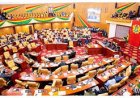
Addressing the media in parliament during a press conference Minority leader Hon Alexander Afenyo-Markin described the NDC government as one driven by “propaganda” and “settings,” alleging that the administration has failed to match its promises with action.
He questioned the effectiveness of the government’s widely publicized “one job, three shifts” policy, stating that unemployment remains a major concern among the youth.
The Minority in parliament led by their leader also focused heavily on challenges in the agricultural sector. According to them, cocoa farmers were promised improved cocoa prices, but the rates eventually announced were lower than those inherited from the previous administration under former President Nana Akufo-Addo.
Rice farmers were also cited as facing serious difficulties, with the speaker arguing that imported rice continues to sell at cheaper prices than locally produced rice, making it difficult for local farmers to compete.
Maize and yam farmers were equally mentioned as groups struggling under current economic conditions.
On the issue of utility costs, the Efutu lawmaker criticized the government for increasing electricity tariffs by nearly 30 percent and water tariffs by 19 percent within the first year and a half of taking office.
He further claimed that the country is witnessing the return of irregular power supply, popularly known as “dumsor.”
The opposition in parliament also accused the government of failing to absorb trained teachers and nurses into the public sector despite growing unemployment among graduates.
Additionally, concerns were raised over recruitment into the security services, with allegations that many applicants are required to pay expensive medical examination fees even though available recruitment slots remain limited. The speech adds to increasing political debate over the government’s management of the economy, agriculture, public employment, and the rising cost of living in the country.