
Former Goldman Sachs Executive Asante Berko Convicted in US Bribery and Money-Laundering Case
New York, has convicted Asante Kwaku Berko, a former Goldman Sachs executive and former Managing Director of the Tema Oil Refinery (TOR), on charges arising from a bribery scheme linked to a proposed power plant project in Ghana
 HENRY GERCHI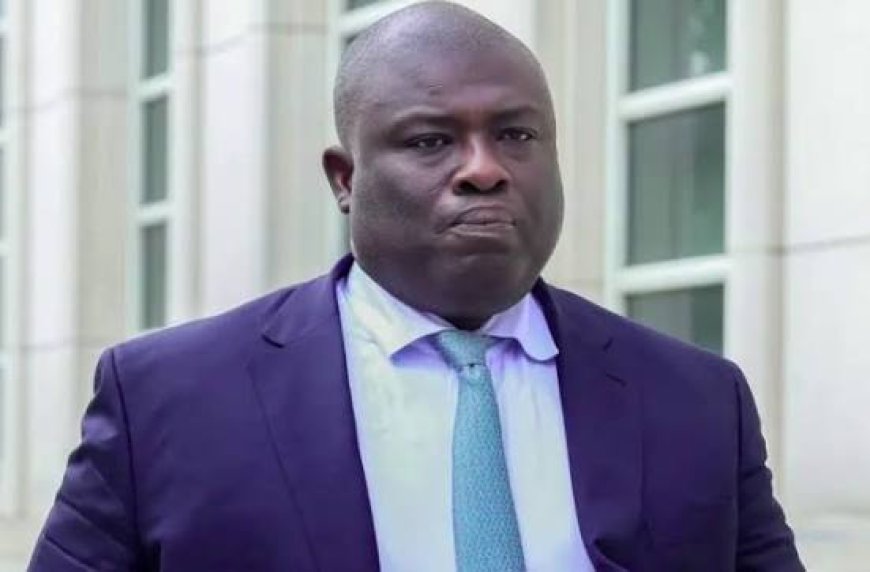
Former Goldman Sachs Executive Asante Berko Convicted in US Bribery and Money-Laundering Case




New York, August 2026 — A federal jury in Brooklyn, New York, has convicted Asante Kwaku Berko, a former Goldman Sachs executive and former Managing Director of the Tema Oil Refinery (TOR), on charges arising from a bribery scheme linked to a proposed power plant project in Ghana.
The case, prosecuted by the United States Department of Justice, centres on allegations that Berko and his co-conspirators arranged corrupt payments to Ghanaian government officials to help secure and retain a power-generation contract for a Turkish energy company.
According to U.S. court documents, the alleged scheme operated between December 2014 and March 2017, during which Berko was an executive in the investment banking division of a U.S. financial institution. He was involved in a transaction between the institution’s client, a Turkish energy company, and the Government of Ghana for the construction and financing of a power plant. (Department of Justice)
Alleged payments to Ghanaian officials
The U.S. indictment alleges that Berko and others arranged payments to Ghanaian officials in connection with the power project. Court documents identify one recipient as an adviser to a senior official at Ghana’s Ministry of Power and another as a high-ranking official within the ministry. (Department of Justice)
The indictment also alleges that five Ghanaian officials who travelled to Turkey to inspect equipment for the proposed project each received US$5,000.
The U.S. government’s case further alleges that additional payments were made after Ghana’s Parliament ratified the power project in July 2015. The alleged payments were concealed through various financial arrangements, including the use of intermediaries and falsified documentation.
The Securities and Exchange Commission separately alleged that Berko later received US$2 million from the Turkish energy company in four instalments between September 2016 and February 2017 for his role in arranging the bribery scheme. (SEC)
Goldman Sachs connection
Berko was working for a subsidiary of a major U.S. financial institution while involved in the transaction. According to the U.S. case, he used his position and access to facilitate the deal while allegedly concealing aspects of the bribery arrangement from his employer.
The allegations included the use of personal email accounts and falsified invoices to conceal payments connected to the scheme. (Debevoise)
Ghana political context
The alleged conduct began in 2014, during the administration of then-President John Dramani Mahama, and continued after the 2016 presidential election.
However, the U.S. court documents reviewed for this report do not establish that President Mahama personally authorised, directed or participated in the alleged bribery scheme. Neither should the allegations against unidentified or anonymised Ghanaian officials automatically be attributed to the NDC as a political organisation without further evidence.
The court documents instead refer to Ghanaian officials by descriptions such as officials within the Ministry of Power. Their identities and the extent of their alleged involvement are matters that must be distinguished from broader political claims.
A case with wider implications
The Berko case highlights the vulnerability of major infrastructure and energy transactions to corruption risks and raises questions about the safeguards surrounding public procurement and foreign investment in Ghana.
The U.S. Department of Justice has described the case as an example of how the American financial system can be used in international bribery schemes. (Department of Justice)
Berko was extradited from the United Kingdom to the United States in July 2024 after being arrested in the UK in November 2022. He had been charged with conspiracy to violate the Foreign Corrupt Practices Act, violating the FCPA and conspiracy to commit money laundering. (Department of Justice)
The conviction now moves the case to the sentencing stage.
Key takeaway
The conviction establishes that a U.S. jury found Berko guilty of the offences charged in connection with the Ghana power-plant transaction. The case involves alleged payments to Ghanaian officials during the Mahama-era administration, but claims assigning direct responsibility to President Mahama, the NDC or specific political officials should not be presented as established facts unless supported by evidence from the court or other authoritative sources.